

Most constitutional crises do not arrive with tanks in the streets. They arrive with legislation, judicial appointments, procedural maneuvers, and amendments drafted in the language of legality itself. Mark Tushnet's concept of constitutional hardball captures this precisely: political actors exploit the formal letter of the constitution to destroy its animating spirit. The crisis is not a rupture. It is a slow suffocation.
This makes remedies for constitutional crisis extraordinarily difficult to design. Before you can remedy a crisis, you must diagnose it. Diagnosis is where most constitutional systems fail. Tom Ginsburg and Aziz Huq drew a critical distinction in "How to Lose a Constitutional Democracy" (65 UCLA L. Rev. 78, 2018) between two paths of democratic failure: authoritarian reversion, the rapid, visible seizure of power through coups or autogolpes, and constitutional retrogression, the incremental, legalistic erosion of competitive elections, free speech, and the rule of law. Reversion is dramatic and amenable to dramatic remedies. Retrogression is quiet, and it closes off remedy pathways before most observers recognize the danger.
Steven Levitsky and Daniel Ziblatt identified the underlying mechanism in How Democracies Die (Crown, 2018): the erosion of two norms no constitution can codify. Mutual toleration, the acceptance of political opponents as legitimate, and institutional forbearance, the restraint from exercising legal powers to their fullest destructive extent. When both norms collapse, formal institutions become weapons.
Comparative evidence across jurisdictions points to a consistent conclusion. No single remedy suffices. Effective responses combine multiple tracks: judicial, legislative, electoral, constitutional design, civil society mobilization, and international mechanisms. I draw on cases from India, South Korea, Brazil, Poland, Hungary, Israel, and others to map these remedy categories and their interactions. The goal is not a checklist. It is a diagnostic framework.
Diagnosing the Crisis: Why the Type of Breakdown Determines the Remedy
A cardiologist does not prescribe the same treatment for a heart attack and for arterial plaque building over decades. Constitutional crisis works the same way. The type of breakdown determines which remedies are available, which institutions can deliver them, and in what sequence.
Ginsburg and Huq's framework, elaborated in How to Save a Constitutional Democracy (University of Chicago Press, 2018; updated 2026 edition), provides the foundational distinction. Authoritarian reversion is the heart attack: a coup, an autogolpe, a sudden seizure. The remedy set is relatively clear. Impeachment, military restraint, mass mobilization, international sanctions. Retrogression is the arterial plaque. It operates through incremental erosion of three pillars: competitive elections, liberal rights to speech and association, and the rule of law including judicial independence. Because retrogression involves no single triggering event, it evades the alarm systems built into most constitutional orders.
Levitsky and Ziblatt's three-stage model sharpens the diagnostic lens further. Stage one: capture institutions, particularly courts and electoral bodies. Stage two: target opponents through selective prosecution, media suppression, or electoral manipulation. Stage three: entrench dominance by altering constitutional rules to prevent future loss of power. Remedies must match the stage.
Tushnet's concept of abusive constitutionalism describes the legal mechanism enabling retrogression. Consider Pakistan's 27th Amendment (2025), creating an executive-appointed Federal Constitutional Court and granting presidents lifetime immunity. Or Mexico's 2024 constitutional amendments immunizing all amendments from judicial review and mandating direct election of judges. Both operated entirely within formal amendment procedures. Both hollowed out democratic substance while maintaining democratic form.
William Baude, Samuel Bray, and Marin Levy surveyed the full remedial landscape in "Remedies for a Constitutional Crisis" (Harvard Law Review, forthcoming 2026; SSRN No. 5543858). Their central finding: remedial options are broader than commonly assumed, spanning judicial orders, legislative action, executive self-restraint, state-level resistance, and civil society pressure. But no single institution can resolve a crisis alone. The remedy must be distributed across multiple actors acting in concert.
Courts come first below, not because they are most important, but because they are the institution most commonly expected to act.
Judicial Remedies: The Basic Structure Doctrine and Its Limits
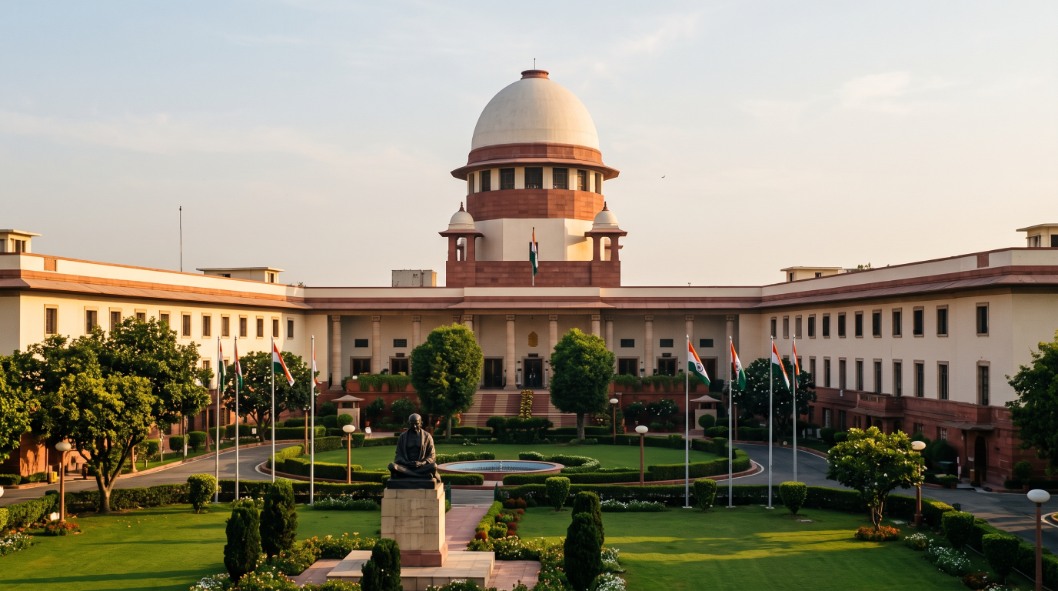
On April 24, 1973, by a razor-thin 7-6 majority, the Supreme Court of India decided Kesavananda Bharati v. State of Kerala (AIR 1973 SC 1461) and invented a doctrine that has since traveled across continents. The basic structure doctrine holds that certain features of a constitution are so fundamental that even the sovereign amendment power cannot destroy them. No explicit textual basis existed for this holding. The Court constructed it from constitutional logic itself.
The doctrine has proven remarkably portable. India's own Supreme Court reaffirmed and extended it in Minerva Mills Ltd. v. Union of India, (1980) 3 SCC 625, holding that the power to amend is itself part of the basic structure and cannot be used to confer unlimited amending power. Bangladesh adopted the doctrine. Pakistan's courts applied it before the 27th Amendment attempted to circumvent judicial review entirely. In November 2024, Lesotho's Court of Appeal invalidated the 9th Amendment under basic structure reasoning. Most strikingly, Israel's Supreme Court applied basic structure logic in Movement for Quality Government in Israel v. Knesset, HCJ 5658/23 (January 1, 2024), striking down the government's amendment limiting reasonableness review of executive decisions. The full bench of fifteen justices ruled 8-7, a landmark in a consolidated democracy with no written constitution in the traditional sense.
The basic structure doctrine represents the most aggressive form of judicial remedy for constitutional crisis. It allows courts to invalidate constitutional amendments, not merely statutes. It draws a line that the political branches cannot cross even through supermajority action. Contrast this with the United States, where constitutional amendments are treated as unreviewable by courts. The American system has no judicial backstop against an amendment that dismantles democratic fundamentals.
Beyond the basic structure doctrine, courts have deployed structural injunctions and nationwide injunctions as crisis-era tools. These orders reshape institutional behavior across entire systems rather than resolving individual disputes. The US Supreme Court curtailed nationwide injunctions in Trump v. CASA, Inc., 604 U.S. ___ (2025), holding that lower courts may not issue universal injunctions extending beyond the parties before them. This retrenchment occurred precisely when such tools were most needed. The foundational doctrine governing executive overreach in the United States remains Youngstown Sheet & Tube Co. v. Sawyer, 343 U.S. 579 (1952), in which the Supreme Court struck down President Truman's seizure of steel mills, establishing a tripartite framework for evaluating presidential action against congressional will.
The fundamental limitation of judicial remedies is enforcement. Courts issue orders. They depend entirely on executive compliance to give those orders effect. Poland illustrates the recursive problem with devastating clarity. The PiS-captured Constitutional Tribunal invalidated all three reform acts passed by the Tusk government after the 2023 democratic transition. The institution designed to safeguard the constitution had itself become the instrument of constitutional erosion. As Baude, Bray, and Levy observe, judicial remedies cannot necessarily "avert or undo a constitutional crisis" when the judiciary itself is compromised.
When courts are captured or ignored, the remedy must come from legislatures and voters.
Legislative and Electoral Remedies: From Impeachment to the Ballot Box
South Korea has done something no other democracy has replicated. It has successfully impeached and removed two sitting presidents through a constitutionally structured two-stage process: legislative vote followed by Constitutional Court adjudication. The National Assembly impeached Park Geun-hye in December 2016, and the Constitutional Court confirmed her removal in Decision on the Impeachment of President Park Geun-hye, Constitutional Court of Korea, Case No. 2016Hun-Na1 (March 10, 2017). The Assembly impeached Yoon Suk-yeol in December 2024, following his short-lived declaration of martial law, and the Constitutional Court confirmed his removal in Constitutional Court of Korea, Case No. 2024Hun-Na8 (April 4, 2025). Two presidents. Two removals. A functioning system.
The South Korean model works because it separates the political act of impeachment from the legal act of removal. The National Assembly needs only a simple majority to impeach. The Constitutional Court then conducts an independent legal review. Compare this with the United States, where the Senate requires a two-thirds supermajority for removal. As Ginsburg, Huq, and Landau documented in "Comparative Impeachment" (88 U. Chi. L. Rev. 81), the US threshold makes removal practically impossible along partisan lines. The US has impeached presidents three times and removed none.
The electoral remedy remains the most foundational democratic response to crisis. Brazil in 2022 proved the point. Despite Jair Bolsonaro's sustained campaign to discredit electoral institutions, the system held. Lula defeated Bolsonaro. The transfer of power occurred. If electoral institutions survive, democratic self-correction remains possible. The Brennan Center for Justice documented how Brazil's independent electoral court system provided the institutional backbone for this outcome.
The US Reconstruction Amendments (13th, 14th, and 15th) represent the paradigmatic legislative remedy, fundamentally transforming the constitutional order after the most severe systemic breakdown in American constitutional history. The 14th Amendment's scope was later confirmed in United States v. Nixon, 418 U.S. 683 (1974), where the Supreme Court unanimously held that no president stands above the constitutional order, rejecting executive privilege as an absolute shield and affirming the principle that judicial authority to interpret the constitution cannot be defeated by presidential assertion alone.
But electoral remedies fail when the electoral exit is closed. Term limit removals in Chad, Guinea, Nicaragua, and El Salvador (2025) represent abusive amendment strategies designed to eliminate democratic alternation. If electoral institutions are captured, other remedies must restore electoral integrity before the ballot box can function as a corrective.
Brazil offers a 2025 counterpoint. The so-called Shielding Amendment, which would have granted broad immunity to former officials, was unanimously rejected by the Senate after massive street protests forced legislative retreat. Electoral accountability and civil society mobilization reinforced each other. Neither alone would have sufficed.
These remedies respond to crisis after it emerges. Can constitutional design prevent crisis from materializing?
Constitutional Design as Preventive Remedy
Hungary's Fidesz government, upon securing a constitutional supermajority in 2010, lowered the supermajority threshold for constitutional amendments as one of its first acts. The safeguard designed to prevent constitutional abuse was itself the first target. This pattern recurs across jurisdictions and reveals a fundamental vulnerability in preventive constitutional design.
Amendment safeguards are the most common preventive mechanism: supermajority requirements, mandatory referenda, cooling-off periods between legislative readings. South Africa's Constitution requires a two-thirds National Assembly vote plus six of nine provinces in the National Council. These mechanisms raise the cost of constitutional change. But they are effective only if the threshold itself is protected from manipulation. Hungary proved that a single electoral supermajority can dismantle the entire safeguard architecture.
Independent judicial appointment commissions represent another design strategy, insulating courts from political capture through institutionally diverse selection processes. Poland's National Council of the Judiciary (KRS) was designed for precisely this purpose. The PiS government captured the KRS itself, appointing loyalists who then selected compliant judges. The safeguard became the vector of capture. A recursive problem with no easy design solution.
Sweden offers a more hopeful 2025 example. Broad, consensus-based constitutional amendments strengthened judicial independence with cross-party support. The Swedish model suggests that preventive design works best when embedded in political culture, not imposed against it.
Emergency power limits constitute a critical design element: sunset clauses requiring periodic legislative renewal, mandatory proportionality review, and legislative oversight of executive emergency action. Turkey after the 2016 coup attempt illustrates the danger of permanent emergency. The state of emergency lasted two years, enabling sweeping purges of judiciary, military, and civil service that permanently altered institutional composition.
The key insight from Levitsky and Ziblatt: no constitutional text is self-enforcing. The norms of mutual toleration and institutional forbearance that make constitutions work cannot be legislated into existence. Design remedies raise the costs of subversion and buy time. They depend ultimately on political actors willing to respect the spirit of constraints they have the power to circumvent.
When formal institutions fail, civil society becomes the last democratic backstop.
Civil Society Mobilization and Political Culture
Erica Chenoweth's research at Harvard Kennedy School's Nonviolent Action Lab produced one of the most consequential findings in political science: nonviolent civil resistance campaigns historically succeed at higher rates than violent ones. The dataset spans over a century and hundreds of campaigns. The implication for constitutional crisis is direct. Mass mobilization is not merely an expression of popular discontent. It is a structurally effective mechanism for defending democratic institutions.
Brazil's 2025 experience demonstrates the mechanism in practice. When the Shielding Amendment threatened to grant broad immunity to former officials, massive street protests erupted across the country. The Senate did not merely defeat the amendment. It rejected it unanimously. Civil society imposed a political cost that made support for the measure untenable.
Poland tells a longer story. From 2017 onward, sustained pro-democracy protests, including the "Chain of Light" demonstrations outside courthouses, kept judicial independence in public consciousness. These protests alone did not reverse the PiS government's court-packing. But they contributed to the political conditions that produced the 2023 electoral shift. Mobilization created the environment in which the electoral remedy could function.
Rosalind Dixon of the University of New South Wales has documented a complementary model: collaborative academic-civil society action. Dixon's work shows how expert mobilization (law professors and constitutional scholars providing public analysis) stopped Australia's proposed voter ID legislation by reframing the public debate around its constitutional implications. Expert mobilization complements mass action by shaping the terms of argument.
Levitsky and Ziblatt's norms of mutual toleration and forbearance are products of political culture, shaped by education, media ecosystems, and civic practice over generations. No judicial order or legislative command can create them.
Civil society mobilization faces a structural limitation against retrogression. Incremental erosion provides no single galvanizing moment. Each individual step appears modest. Protest fatigue is real. Norm Eisen's Democracy Playbook (Brookings, 2025) identifies seven pillars of democratic resilience, civic engagement among them, but sustaining engagement against slow-moving threats remains the central challenge.
Beyond domestic remedies, international actors offer a supplementary, if limited, toolkit.
International and Supranational Mechanisms
The European Union possesses, on paper, the most powerful supranational mechanism for addressing democratic backsliding among its member states. Article 7 of the Treaty on European Union allows suspension of a member state's voting rights in the Council. In practice, it has proven ineffective. A 2023 study in the Journal of Common Market Studies confirmed what observers long suspected: the unanimity requirement for Article 7 sanctions makes the provision functionally unusable when more than one member state engages in backsliding simultaneously. Hungary shields Poland. Poland shields Hungary.
EU funding conditionality has proven more effective. Regulation (EU) 2020/2092 links EU budget disbursements to compliance with rule-of-law standards. The mechanism has been applied to Hungary in four separate instances, creating real financial pressure. Billions of euros in suspended funding concentrate political attention in ways that diplomatic statements cannot. This model represents the most promising international mechanism currently operating.
The Organization of American States and the Inter-American Democratic Charter failed in Venezuela. Hugo Chavez expanded the Supreme Court from 20 to 32 members. Nicolas Maduro packed it again in 2015. The court stripped the opposition-controlled legislature of its lawmaking powers in March 2017. Venezuela withdrew from the OAS entirely in 2017.
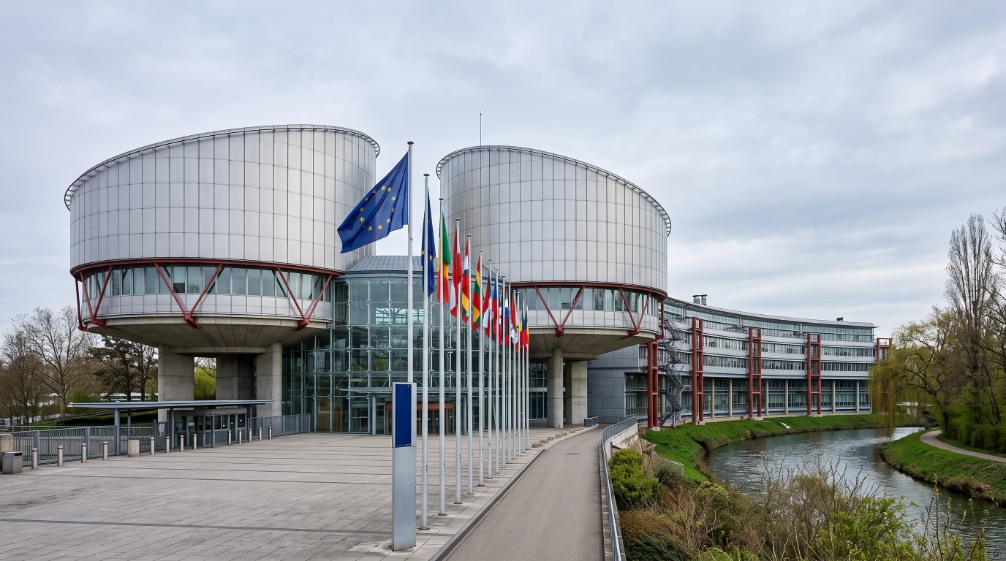
The European Court of Human Rights operates on a different plane. It can declare violations and award damages, but it cannot compel structural reform. In Reczkowicz v. Poland, ECtHR, App. No. 43447/19 (July 22, 2021), the Court found that Poland's Supreme Court lacked independence because judges were appointed through the PiS-captured National Council of the Judiciary, violating Article 6(1) of the European Convention on Human Rights. The Grand Chamber confirmed this reasoning in Dolinska-Ficek and Ozimek v. Poland, ECtHR, App. Nos. 49868/19 and 57511/19 (November 8, 2021). These rulings created legal obligations for structural reform. Poland has not yet complied. Earlier, the ECtHR established that the dismissal of a sitting supreme court president for political reasons violated judicial independence in Baka v. Hungary, ECtHR, Grand Chamber, App. No. 20261/12 (June 23, 2016), a ruling directly on point for Hungary's systematic targeting of judicial leadership.
The comparative evidence yields a consistent finding: international mechanisms work best when reinforcing domestic actors already mobilizing for reform. Poland's 2023 democratic transition combined EU financial pressure with sustained domestic civil society mobilization and an electoral remedy. International tools rarely succeed as standalone interventions. They amplify domestic momentum. They do not create it.
The Sequencing Challenge: Why No Single Remedy Suffices
The most dangerous feature of constitutional retrogression is its recursive quality. The institution you need to remedy the crisis is often the institution that has been captured. Poland's Constitutional Tribunal was designed to protect constitutional order. Once captured by PiS, it became the instrument blocking democratic restoration. The judicial remedy was foreclosed. The electoral remedy had to come first. Only after the 2023 elections could the new government begin addressing judicial capture, and even then, the captured Tribunal invalidated its reform legislation.
Successful cases combined multiple remedy tracks operating simultaneously or in deliberate sequence. South Korea layered judicial review (Constitutional Court adjudication) over legislative action (National Assembly impeachment) sustained by massive civil society mobilization (candlelight protests involving millions). Brazil combined electoral integrity (independent electoral courts), voter mobilization (record turnout in 2022), and institutional resistance (military refusal to support Bolsonaro's claims). Poland required electoral victory (2023), EU financial pressure (funding conditionality), civil society endurance (years of protest), and ongoing judicial contestation.
Failed cases relied on single tracks. Venezuela depended almost entirely on international pressure through the OAS and bilateral sanctions. Without domestic institutional capacity, external pressure dissipated. Hungary has faced EU Article 7 proceedings since 2018 without meaningful consequence, because domestic opposition has been unable to overcome Fidesz's structural electoral advantages. Hungary's 14th Amendment (2025) further altered judicial appointments to favor government allies.
The stakes of getting the sequencing right are rising. The Polity Project downgraded the United States from "democracy" to "non-democracy" as of February 2025, citing executive power concentration. Over 1,000 law professors, including Erwin Chemerinsky of Berkeley, signed a letter in early 2025 declaring a constitutional crisis. The global trend of abusive constitutionalism means remedies for constitutional crisis must be continuous, anticipatory, and multi-tracked. Waiting for crisis to arrive before designing the response guarantees the response will come too late.