

Introduction
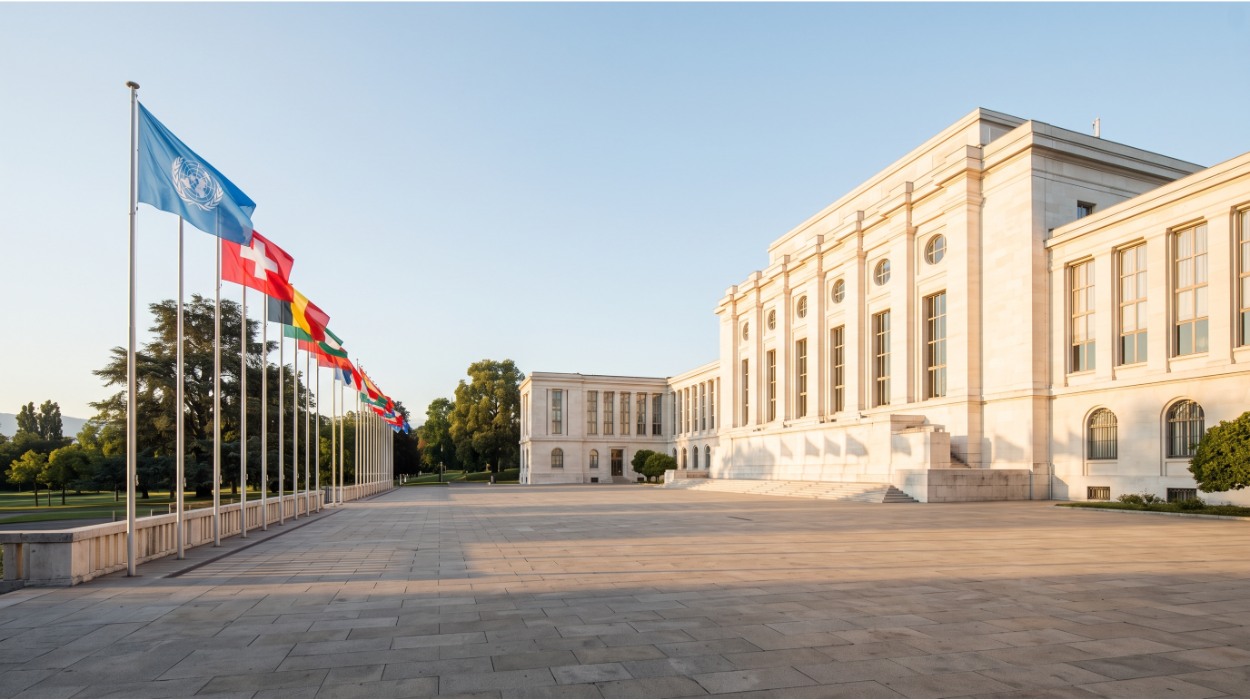
The law of armed conflict rests on an uncomfortable concession: armed conflict occurs, and law's role is to constrain its worst excesses. The Geneva Conventions of 1949 ↗, ratified by all 196 states, represent the most universally accepted treaty regime in human history.
IHL, LOAC, and jus in bello are interchangeable labels for the same legal framework governing conduct during armed conflict. Geneva Law, anchored in the four Geneva Conventions and their Additional Protocols, protects persons not or no longer participating in hostilities. Hague Law, originating in the 1899 and 1907 Hague Conventions, regulates means and methods of warfare. This body of law is distinct from jus ad bellum — the rules governing the resort to force — which is examined in our companion piece on the doctrine of sovereignty in modern international law.
Jus ad Bellum and Jus in Bello: Why the Distinction Matters
A soldier fighting for an aggressor state does not forfeit IHL protections. Jus ad bellum and jus in bello operate as distinct normative universes.
Jus ad bellum governs whether a state may lawfully resort to armed force. The UN Charter, Art. 2(4), prohibits the use of force against the territorial integrity or political independence of any state. Two exceptions exist: Security Council authorization under Chapter VII and the inherent right of self-defence recognized in Art. 51. In Military and Paramilitary Activities in and against Nicaragua (Nicaragua v. United States), ICJ, 1986 ICJ Rep. 14 (June 27), the Court confirmed the customary law prohibition on the use of force and articulated the contours of collective self-defence, providing the leading jus ad bellum authority.
Jus in bello governs how hostilities are conducted once armed conflict exists. It applies equally to all parties. If IHL protections were conditional on which side lawfully resorted to force, combatants fighting under an unlawful mandate would have no incentive to respect the rules. The equal application principle preserves IHL's humanitarian purpose regardless of the conflict's origins.
Treaty Framework: Geneva Conventions, Additional Protocols, and Hague Law

The four Geneva Conventions of 1949 form IHL's foundation. Convention I protects wounded and sick in the field. Convention II extends analogous protection at sea. Convention III establishes the prisoner-of-war regime. Convention IV protects civilians in enemy hands, particularly in occupied territory. All four share Common Article 3, which establishes minimum humanitarian standards for non-international armed conflicts. The ICJ in Nicaragua called Common Article 3 a reflection of "elementary considerations of humanity."
Additional Protocol I (1977) supplements the Conventions for international armed conflicts. It codifies distinction (Art. 48), defines military objectives (Art. 52(2)), prohibits indiscriminate attacks including those violating proportionality (Art. 51(5)(b)), and imposes precautionary duties (Art. 57). Additional Protocol II (1977) applies to NIACs but requires non-state territorial control and sustained military operations under responsible command.
The Martens Clause, codified in AP I, Art. 1(2), provides that in cases not covered by treaty or custom, civilians and combatants remain under the protection of the principles of humanity and the dictates of public conscience. Its relevance to autonomous weapons systems is increasingly significant.
The ICRC Customary IHL Study ↗ (Henckaerts and Doswald-Beck, 2005) identified 161 rules of customary IHL, of which 147 apply in NIACs. The US State Department challenged the study's methodology in a November 3, 2006 letter, but many identified rules enjoy broad acceptance.
Core Principles of IHL: Distinction, Proportionality, Necessity, and Humanity
Distinction is the cornerstone. AP I, Art. 48 requires parties to distinguish between the civilian population and combatants. A military objective, per Art. 52(2), is an object which by its nature, location, purpose, or use makes an effective contribution to military action and whose destruction offers a definite military advantage.
Proportionality prohibits attacks expected to cause civilian harm "excessive in relation to the concrete and direct military advantage anticipated" (AP I, Art. 51(5)(b); ICRC Rule 14). In Prosecutor v. Ante Gotovina and Mladen Markac, Case No. IT-06-90-A (November 16, 2012), the ICTY Appeals Chamber reversed the Trial Chamber's conviction, finding the 200-metre error margin used to infer indiscriminate attack was not a reasonable standard.
Precaution imposes affirmative obligations. AP I, Art. 57 requires commanders to verify targets, choose means minimizing civilian harm, and refrain from launching disproportionate attacks. Military necessity permits measures not otherwise prohibited by IHL that are indispensable for securing the enemy's submission, but it never justifies violations of specific prohibitions. Humanity, expressed in AP I, Art. 35(2), prohibits weapons causing superfluous injury or unnecessary suffering.
Conflict Classification: International and Non-International Armed Conflicts
An international armed conflict (IAC) exists whenever armed force is used between two or more states. Common Article 2 requires no minimum intensity threshold. A non-international armed conflict (NIAC) involves hostilities between a state and an organised armed group, or between such groups.
The ICTY Appeals Chamber in Prosecutor v. Dusko Tadic, Case No. IT-94-1-AR72 (October 2, 1995), established the definitive NIAC test: "protracted armed violence between governmental authorities and organised armed groups, or between such groups within a State." This test has two limbs: intensity of violence and organisation of parties.
The legal consequences are stark. Combatant privilege exists only in IAC. NIAC fighters may face domestic prosecution for merely taking up arms. The grave breaches regime (Arts. 146–147) applies only in IAC. However, the Rome Statute, Art. 8(2)(c) through (f), criminalises serious IHL violations in NIAC, reflecting the convergence trend the Tadic Appeals Chamber identified.
Prosecutor v. Jean-Paul Akayesu, ICTR, Case No. ICTR-96-4-T (September 2, 1998), the first international conviction for genocide, arose in a NIAC context and demonstrated that the gravest violations of humanitarian norms occur across all conflict types. In Prosecutor v. Dominic Ongwen, ICC, Case No. ICC-02/04-01/15 (February 4, 2021), the ICC convicted a former child soldier turned LRA commander for war crimes in NIAC, confirming that criminal responsibility attaches regardless of the perpetrator's own victimisation. The enforcement dimension of these prosecutions is examined further in our article on universal jurisdiction and the prosecution of international crimes.
Direct Participation in Hostilities and Civilian Protection
AP I, Art. 51(3) provides that civilians enjoy protection "unless and for such time as they take a direct part in hostilities." The ICRC's Interpretive Guidance on Direct Participation in Hostilities (2009), authored principally by Nils Melzer, proposed three cumulative criteria: threshold of harm, direct causation, and belligerent nexus.
The "revolving door" problem is the central difficulty. Michael Schmitt, writing in the Harvard National Security Journal, Vol. 1 (2010), argues the ICRC approach is operationally unworkable: a fighter who plants an IED at dawn and another at dusk cannot realistically be targeted only during moments of placement. The ICRC addresses this through continuous combat function (CCF), under which members of organised armed groups whose continuous function is to conduct hostilities lose protection for as long as they assume that function.
Prosecutor v. Thomas Lubanga Dyilo, ICC, Case No. ICC-01/04-01/06 (March 14, 2012), the ICC's first conviction, underscored the stakes of these classifications by holding that conscripting and enlisting children under fifteen and using them to participate actively in hostilities constitutes a war crime.
The IHL and International Human Rights Law Interface
The interaction between IHL and international human rights law is one of the most consequential developments in modern public international law.
The ICJ established the foundational position in Legality of the Threat or Use of Nuclear Weapons, Advisory Opinion, 1996 ICJ Rep. 226 (July 8), at paragraph 25: the right not to be arbitrarily deprived of life does not cease in armed conflict. What constitutes "arbitrary" deprivation is determined by the applicable lex specialis.
The ICJ confirmed co-applicability in Legal Consequences of the Construction of a Wall in the Occupied Palestinian Territory, Advisory Opinion, 2004 ICJ Rep. 136 (July 9). In Armed Activities on the Territory of the Congo (DRC v. Uganda), ICJ, 2005 ICJ Rep. 168 (December 19), the Court held that both IHL and IHRL applied in occupied Ituri, establishing state responsibility for Uganda's failure to prevent violations by armed groups operating in territory under its effective control.
Two ECtHR judgments illustrate the practical stakes. In Al-Skeini and Others v. United Kingdom, App. No. 55721/07 (July 7, 2011), the Grand Chamber held that the UK exercised extraterritorial jurisdiction over individuals killed by British soldiers in Basra, triggering Article 2 ECHR obligations. In Hassan v. United Kingdom, App. No. 29750/09 (September 16, 2014), the Grand Chamber accepted that IHL internment powers in IAC could be accommodated within Article 5 ECHR, despite security detention having no explicit Convention basis.
Enforcement and Individual Criminal Responsibility
The Geneva Conventions imposed obligations to prosecute or extradite individuals accused of grave breaches (Arts. 146–147), establishing universal jurisdiction. Prosecutions were rare until the ad hoc tribunals of the 1990s.
The ICTY transformed enforcement. Tadic (1995) established individual criminal responsibility for serious IHL violations in NIACs. In Prosecutor v. Tihomir Blaskic, Case No. IT-95-14-T (March 3, 2000), the ICTY articulated command responsibility standards. The Prosecutor v. Zejnil Delalic et al. (Celebici case), ICTY, Case No. IT-96-21-T (November 16, 1998), further refined the doctrine, holding that a superior is liable under the "had reason to know" standard even absent actual knowledge of subordinates' crimes. In Prosecutor v. Radislav Krstic, ICTY, Case No. IT-98-33-T (August 2, 2001), the Trial Chamber convicted for aiding and abetting genocide at Srebrenica, confirming genocide as the gravest breach of IHL obligations.
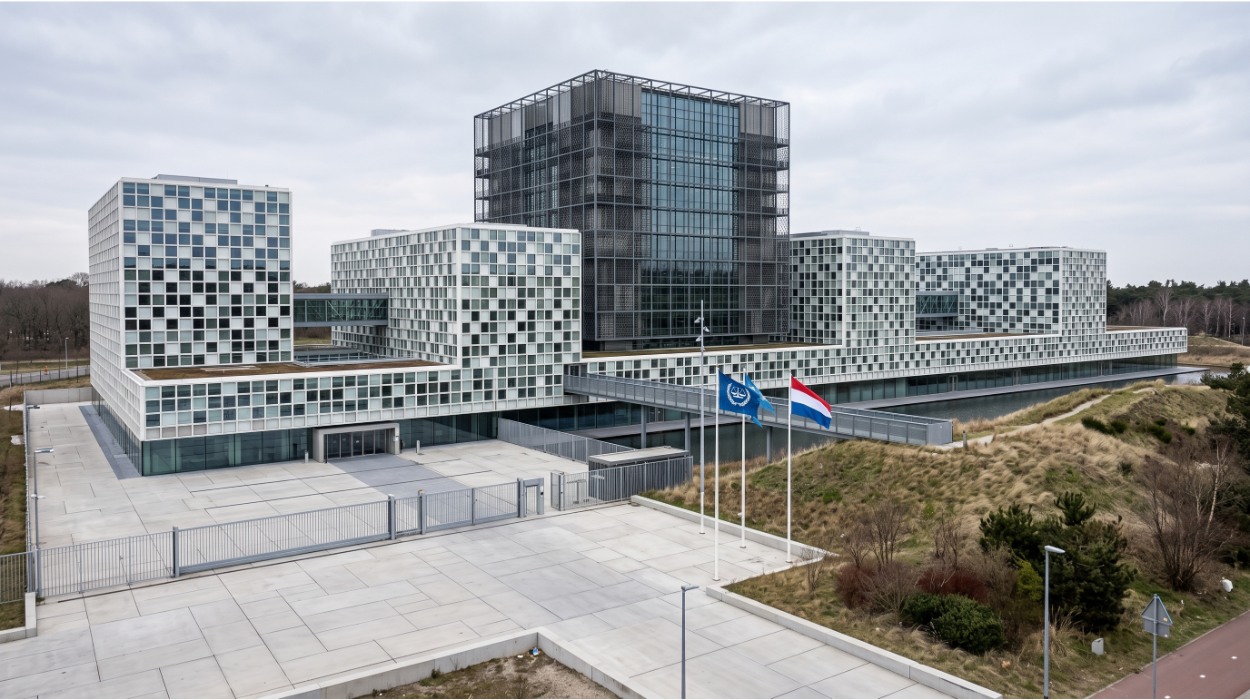
The International Criminal Court ↗, under Rome Statute Article 8, secured its first cultural property conviction in Prosecutor v. Ahmad Al Faqi Al Mahdi, Case No. ICC-01/12-01/15 (September 27, 2016). The complementarity principle (Art. 17) ensures the ICC acts only where national courts are genuinely unwilling or unable to prosecute. Non-state party non-cooperation and Security Council veto politics continue to constrain the ICC's reach.
Contemporary Challenges: Autonomous Weapons Systems and Cyber Operations
Autonomous weapons systems (AWS) challenge IHL's core. Distinction requires qualitative judgment; proportionality demands context-sensitive weighing. These are not algorithmic determinations. The ICRC stated in October 2025 that a binding instrument is needed to prohibit unpredictable AWS and AWS targeting humans autonomously. Cordula Droege, the ICRC's Chief Legal Officer, has argued that fully autonomous anti-personnel targeting is incompatible with IHL. "Meaningful human control" has emerged as the leading doctrinal standard, though its content remains undefined.
The Martens Clause may impose an independent constraint. If AWS cannot comply with the principles of humanity and the dictates of public conscience, the Clause may prohibit them even absent a specific treaty.
Cyber operations present a distinct challenge. The Tallinn Manual 2.0 ↗ (2017) provides the most comprehensive academic treatment of how international law — including IHL — applies to cyber operations. The threshold question is when a cyber operation constitutes an "attack" under AP I, Art. 49(1). Operations causing physical destruction clearly qualify. Those corrupting data without physical consequences occupy contested legal space.
The convergence of these challenges reflects the broader evolution of armed conflict. Just as the Geneva Conventions adapted the earlier Hague Law framework to industrialised warfare, the international community now faces pressure to adapt IHL to algorithmic and digital battlespaces — a challenge with profound implications for the international legal order as a whole.